What to Do When There’s a Rebar or Post-Tension Material Shortage — And Why Local Suppliers Might Be Your Best Bet

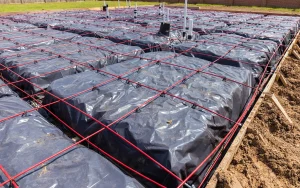
Post tension work truck.
In the construction world, delays cost money — and few delays hit harder than material shortages. Whether it’s rebar, post-tension cable, chairs, couplers, or any other critical structural supply, contractors across Oklahoma (and beyond) are feeling the sting of longer lead times and inconsistent stock from national distributors.

So what do you do when your project needs materials yesterday?

1. Start Local

One of the most overlooked solutions is partnering with a local material supplier that understands your deadlines, your jobsite logistics, and your urgency. At Post-Tension Services of Oklahoma, we’re based right here in Oklahoma, which means:

  • Free delivery in qualifying local areas

  • Faster turnaround times (we can often ship within 24–48 hours)

  •  A real team that works with you, not just for you

When your crew is on-site and the slab is ready, the last thing you want is to be stuck waiting on an out-of-state freight shipment.


2. Ask About Hard-to-Find Materials — We Might Have It

Post-tension systems are incredibly specialized, and not every supplier stocks what you need. From tendons and anchors to stock and fabricated rebar, expansion joints, tie wire, bar tie, nails, bolts strand, or grease-filled encapsulated systems, we keep a diverse inventory and often have access to items that other suppliers don’t.

We’ve helped contractors mid-project who were stuck waiting on national backorders — we jumped in and delivered within days.

If you’re wondering, “Where can I find post-tension cable or rebar near me or in-stock today?” — there’s a good chance the answer is right here.


3. Small Business Means Big Flexibility

We aren’t a big-box supplier. We’re a family-owned company, and that means we can move quickly, communicate clearly, and problem-solve when something goes sideways.

Our customers tell us that’s what makes the difference. We’re not just a warehouse — we’re a resource. Need to coordinate delivery times? Looking for help with quantity takeoffs? Is your original order short and you need backup fast? We do that.


4. What to Search When You Need Materials Fast

Here are some of the most commonly searched phrases from contractors looking for urgent supply solutions — and they all lead to us:

  • “Where to buy rebar near me today”

  • “Post-tension cable supplier in Oklahoma” rebar cables ready to ship

  • “Rebar delivery Oklahoma City”

  • “Buy construction materials fast Oklahoma”

  • “Need post-tension materials ASAP”

  • “Rebar in stock near me”

  • “Small batch rebar supplier”

If you’ve searched any of these, bookmark this page — or better yet, give us a call.


We’re Not Just Fast — We’re Trusted

Over the years, our reputation has grown because we focus on two things: relationship and reliability. You can count on us from start to finish. Whether you’re a GC, project manager, or concrete subcontractor — we make your job easier by making supply simple.


Need Material? Let’s Make It Happen.

If you’re working on a project — or about to start one — and want a supply partner you can actually depend on, we’re ready to help.

Post-Tension Services of Oklahoma
 Based in Oklahoma |  Shipping Available Anywhere
Call:  405-751-1582
Email: orders@ptsok.com
https://post-tensionservicesok.com/products/


If you’re tired of rebar and post-tension delays, give the little guy with the big follow-through a shot.

“Why Did My Concrete Crack?” – The Question No One Wants to Ask After Pour Day

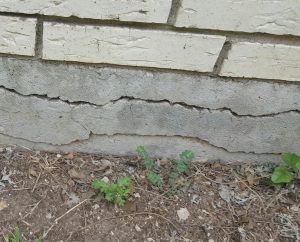
Faulty foundation with cracking.

If you’ve ever walked out onto your brand-new driveway, patio, or foundation slab only to see a crack forming way too soon, you’re not alone. Concrete cracks are one of the most searched questions online, especially by homeowners and first-time builders.

But here’s the thing: not all cracks mean failure—and most of them are 100% preventable.

Common Causes of Concrete Cracks

  1. Shrinkage Cracks – As concrete cures, it naturally shrinks. If not reinforced properly, this causes hairline cracks. Faulty foundation with cracking.

  2. Soil Movement – In areas like Oklahoma, shifting soils from clay or moisture wreak havoc on slabs.

  3. Overloading – Slabs that weren’t designed to carry enough weight (like heavy equipment or vehicles).

  4. Improper Reinforcement – Using the wrong type—or none at all.

  5. Temperature Swings – Concrete expands and contracts with heat, and that stress has to go somewhere


How We Help Prevent Cracks at PTS-OK

At Post-Tension Reinforcing, we’ve spent years perfecting the craft of slab reinforcement, and no—it’s not one-size-fits-all.

We assess your soil type, load requirements, layout, and timeline before recommending one of our two proven methods:

Rebar Reinforcement – Ideal for smaller or localized slabs where cost and control matter most.
Post-Tension Reinforcement – Best for large slabs, homes with active soil conditions, or clients wanting less cracking and longer lifespan.

Then we pair that with:

  • Professional crack control joint placement

  • Precise mix design tailored to weather & usage

  • A team that actually cares how your concrete looks in 10 years 


Why Our Clients Trust Us To Work With Them

We’re not just in the concrete business. We’re in the trust business. As a family-owned company, we take your project personally. You’ll see the difference in how we communicate, how we show up, and how we stand behind our work—long after the concrete has cured.

That’s what’s helped us grow into a larger company without ever becoming a “corporate machine.”
Relationships and reputation have built our foundation—and we don’t crack under pressure.


Let’s Reinforce Your Peace of Mind

Cracks don’t have to be part of your story. Let’s build it right the first time.

11733 N Morgan Road, Yukon, OK 73099
Phone: (405) 751-1582
email: orders@ptsok.com

Post-Tension Services of Oklahoma – Stronger Together, One Pour at a Time

Top 5 Concrete Slab Failures (and How Post-Tension & Rebar Prevent Them

Concrete slab cracking due to lack of reinforcement

Concrete is tough — but it’s not invincible.

Every year, builders and homeowners face costly repairs due to concrete slab failures that could have been prevented with the right reinforcement strategy.

In this post, we break down the five most common slab failures and show how post-tension systems and rebar keep your foundation (and your wallet) intact.

The Most Common Types of Concrete Slab Failures

  1. Cracking from Shrinkage

    • Happens as concrete cures

    • Solution: Proper jointing and rebar placement

  2. Heaving or Settling

    • Caused by poor subgrade or moisture changes

    • Solution: Post-tension slabs distribute loads more evenly

  3. Curling

    • Surface drying faster than the bottom

    • Solution: Post-tension cables resist slab lift

  4. Overloading

    • Especially in garages or industrial floors

    • Solution: Both rebar and PT can boost load capacity

  5. Corrosion of Reinforcement

    • Water and salts attack unprotected steel

    • Solution: Use coated rebar and ensure proper concrete cover 

How Rebar Solves Common Slab Issues

Rebar adds tensile strength to concrete, giving it the muscle to resist cracking and flexing under pressure.

Best Practices:

  • Use proper spacing and bar sizes

  • Elevate rebar off the ground (use chairs)

  • Avoid rebar overlap or gaps in critical zones

The Role of Post-Tensioning in Long-Term Durability

Post-tensioning helps the slab act as a single, compressed unit, minimizing cracking and deflection.

Advantages:

  • Reduces long-term maintenance

  • Helps in areas with soil movement

  • Cuts down on slab thickness and material costs

Signs You Might Have a Reinforcement Problem

If you notice any of these, your slab might be failing: Concrete slab cracking due to lack of reinforcement

  • Visible cracks spreading

  • Doors and windows sticking

  • Sloped or uneven floors

  • Water intrusion near foundation edges

Don’t wait — call a concrete specialist to inspect reinforcement failure before it gets worse.


Conclusion: Prevent Slab Failure Before It Starts

The right reinforcement isn’t just an upgrade — it’s a necessity.

At PTS Reinforcing, we don’t believe in shortcuts. Whether it’s custom-cut rebar or precision post-tension systems, we design every slab to perform under pressure.


Request a site evaluation today
Servicing all U.S locations!

Understanding Post-Tensioning: A Beginner-Friendly Guide

post tension cables

If you’ve ever asked, “What is post-tensioning?” or “How does post-tension work?“—you’re in the right place. Whether you’re a contractor, architect, engineer-in-training, or just curious, this post will break down the basics of post-tensioned concrete systems with simple terms, helpful diagrams, and visual ideas.


What Is Post-Tensioning?

Post-tensioning (PT) is a technique for reinforcing concrete by tensioning high-strength steel strands after the concrete has been poured and cured. It’s part of a broader family of “prestressed concrete” systems.

Think of it like this:

  • Normal rebar resists cracking.

  • Post-tensioned steel actively squeezes the concrete to prevent cracks before they happen.


How Does Post-Tensioning Work?

 Step-by-Step Breakdown:

  1. Cables (tendons) are laid inside plastic sheaths and positioned before the concrete pour.

  2. Concrete is poured and allowed to cure.

  3. After curing, the cables are stretched using hydraulic jacks.

  4. The tensioned cables are anchored at the slab ends, locking the compression force inside the concrete

“Illustrated steps showing how post-tensioning is done in construction

Why Use Post-Tensioning?

Post-tensioning offers many advantages over traditional reinforced concrete:

Benefit

Longer Spans

Crack Control

Material Savings

Design Flexibility

Description

Allows for thinner slabs with fewer beams or columns

Reduces concrete cracking and deflection

Requires less concrete and steel

Supports curved or complex architectural forms


Where Is Post-Tensioning Used?

Post-tension systems are common in:

  • Parking garages

  • High-rise buildings

  • Slabs-on-grade (residential & commercial)

  • Bridges and highways

  • Stadiums and arenas


Common Components of a Post-Tension System

ComponentDescription
TendonsSteel cables or strands in sheathing
AnchorsDevices that hold the tension at the slab edge
Ducts/SheathsPlastic tubes that allow cables to move freely during tensioning
Grout(in bonded systems) Used to fill ducts after tensioning
Grease(in unbonded systems) Lubricates the strand to prevent corrosion

Final Takeaways

  • Post-tensioning strengthens concrete by adding internal compression.

  • It’s widely used in modern structural design due to its efficiency and crack resistance.

  • If you’re working in construction or structural design, understanding PT basics is a must.

Want to see it in action? Keep an eye out for PT markings on slabs or ask your concrete supplier about PT-ready systems.


Need materials or guidance on post-tension jobs?

We supply certified post-tension cables, anchors, grease, sheathing, and more. Our team is ready to help you build smarter and stronger.

Contact us today for pricing or job support.